Hello, friends —
As we get started with this whole newsletter thing, we wanted to clarify something really important:
- We are not experts. At anything.
We have many more questions than answers (and any answers we do have are very unlikely to be THE answers), and that's really how we prefer it.
Our Promise to You
We will freely share our learnings and observations and ask that you take them all with a (very large) grain of salt and also that you share some of yours in return.
And now, on to the good stuff...
In the March edition:
Updates from the Farm
What You're Wondering About: New Life on the Farm
What You're Wondering About: Why We Grow without Chemicals
This Month's Experiment: Hugelkultur in Raised Garden Beds
Updates from the Farm1
No two days are the same here and thank goodness for that. But there are seasons and cycles to life, and we are at the beginning of the yearly period of beginnings - Spring! Around here, spring is filled with new life and hope for the year ahead and also (inevitably) an overly optimistic view of all the things that can get done in the year ahead...
But for now, the grass is growing and the days are warming (a little earlier than expected, if we're being completely honest with you) and these are some of the things that have been happening:
Calves are being born (Welcome to Miss Bri-oche Bun and Miss Poppy-seed Muffin)
Gardens are getting prepped (seed starts and raised beds and chickens making compost, oh my)
Spring cleaning is underway (attempting to move from "overwhelmed" to "just whelmed")
Our learnings from the plants and animals around us are the inspiration behind The Wit and Whimsy Foundation and we are reminded constantly about the importance of showing up, paying attention, and doing whatever is ours to do.
1 It's debatable whether "farm" is a good descriptor for what this place is - we don't sell anything, we don't own a tractor. But... we do interact on a daily basis with cows and chickens and plants of all kinds and stack hay and mend fencing and so many other things that seem representative of what you know of as a "farm." So we'll stick with that for now.
What You're Wondering About...
We asked what you'd like to see included in these newsletters and got some great responses and suggestions (including requests for pictures). Thank you! Read on to hear about what's currently piquing the curiosity of The Wit and Whimsy community:
New Life on the Farm
One thing that's true of life on a farm is that it's pretty tough not to notice the seasonal cycles - throughout the year and also throughout the lives of all the plants and animals, and especially at the beginnings.
So far in 2026, there have been two beautiful little girl calves born: Miss Brioche Bun ("Bri") and Miss Poppyseed Muffin ("Poppy"), daughters to Cinnamon and Pepper, respectively (two of the four original group of cows who joined us and who we refer to as "The Spice Girls" for obvious reasons). Moms and babies are doing great so far and the little girls seem to be developing a sweet little friendship as the herd's newest and smallest members.
We're very grateful that we are almost never needed to assist with calving (and these two were no exception, both textbook unassisted deliveries - Great job so far, Spice Girls!), but we pay close attention as we notice that the ladies are soon to calve to make sure we can be available to help, if needed.
Let us know if you're interested in hearing more about our observations on calving so far or the few times we did need to be more involved - Happy to share more!
Why We Grow Without Chemicals
It's become fairly common, it seems, for we humans to forget that the ground beneath our feet is a dynamic, living ecosystem all unto itself - so many tiny lives and so much living being done without us even noticing.
It's tricky, for sure. We can't see what's happening beneath the surface... but we can infer a great deal based on what we can see above it.
We know, for instance, that wherever we find dandelions the ground beneath them is likely compacted, because we know that dandelions have deep taproots that can help break up compacted soil, improve water infiltration and drainage, and bring much needed minerals up into the top soil from much deeper down.
Learn more about the hidden benefits of weeds.
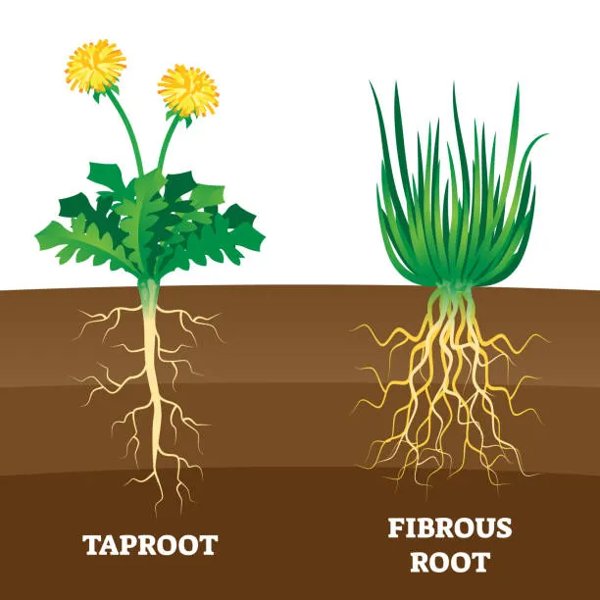
And plants aren't the only indicators of what's happening in the natural world around us... For example, the types of insects you notice drawn to a particular plant or area can also say a lot about the underlying conditions.
DID YOU KNOW? Aphids and other sap-sucking insects are attracted to plants higher in nitrogen. These plants get a bit too big for their britches, growing long and tall before they can properly fortify their tissues. Their thinner, weaker cell walls make them an easy (and very tasty) target for aphids and friends. (We learned this first-hand one year adding much too much Black Kow manure to our sunflower bed.)
The signs are there... But we've somehow forgotten how to speak this language of the natural world, and so instead of helpful allies and indicators, all we see is "noxious weeds" interrupting the beautiful order of our otherwise tidy lawns and gardens and "pests" eating up our "otherwise healthy" plants.
We see what we've learned to see, and we've learned to see "weeds" and "pests" as invaders needing to be dealt with. Chemical interventions (herbicides, pesticides, fungicides, fertilizers) promise us the satisfaction of greater yields with less manual labor.
And if all that matters is growing the largest quantity of a small variety of plants as quickly and efficiently as possible (and sometimes it seems like that is all that matters these days), then there's some justification for all of these chemical interventions... But everything has its price, you know?
All of that to say, the primary reasons we grow without chemicals are:
We like that the "weeds" and "pests" point us to the things we should be noticing and help us really get at the "root causes" of issues we encounter (pun very much intended).
We like having plants that want to grow where they're planted (see: Adaptation Gardening).
We enjoy the idea that we're creating jobs for our soil economy (100s of trillions, at least!).
You are what you eat, and we just haven't developed a taste for all of the chemicals in our food.
It really just isn't necessary in our context and with our goals.
Do we ever add any amendments to our soil? Yes, we do! Mostly homemade and mostly based on an approach called Korean Natural Farming that aims to work with the naturally diverse cast of characters in our local ecosystem to support health and balance.
We've been assembling some new raised garden beds and are going to fill them in "hugelkultur" fashion - Logs at the bottom, then branches and leaves, then a manure/hay/straw mix, and then soil.
The logs and woody material will provide food for all the fun guys (er, fungi) and, over time, act as kind of a sponge to hold in water and ensure the plants don't get too thirsty even if we go through a bit of a dry spell.
The manure/hay/straw mix will provide food for bacteria and variety of soil buddies who turn what we typically see as "waste" into "black gold."
And the soil on top provides the actual growing medium and nutrition zone for the plants.
The hope is that these will become low maintenance beds that provide our primary kitchen garden growing space - anything we might want to cook with on a regular basis - and help us to put the TREMENDOUS amount of manure at our disposal to very good use (thank you, cows!).
We’re curious to see how the beds hold moisture through the summer and whether the plants appreciate the slow release of nutrients. We’re also prepared for it to do something entirely unexpected. Experiments tend to have a mind of their own...
|
This Month's Prompt
Wonder in Practice - A Brief Encounter With the Remarkable Ordinary
The next time you see a "weed," get curious about what it's doing there. Why this plant? Why here? What job is it doing and what benefits does it offer?
Maybe do some research to see what you can learn about it. And maybe just let it be 🙂
BONUS: Do something, big or small, to honor the magnificent splendor of your chosen "weed" (e.g., draw it, paint it, tell someone else about what you learned, throw a party in its honor).
|
What's Ahead
Early spring is a fitting metaphor for where we are right now - seeds sprouting and things warming up. We’re meeting with potential partners, exploring promising pathways, and continuing to collect the small, everyday observations that remind us what's possible.
We sincerely hope that this newsletter will help encourage more meaningful moments of everyday wonder, creativity, and connection. If you're curious about something, let us know - We'd love to explore it together!
Warmly and in wonder,
The Wit and Whimsy Foundation
|


